
What is the difference between a taxi and a VTC? A comparison for travellers
Taxis and VTC both carry passengers with a driver, but you do not hire them the same way and their prices are not set the same way. We explain each difference and when each one suits you.
Published on 12 December 2017 Updated on 1 November 2026 6 min read
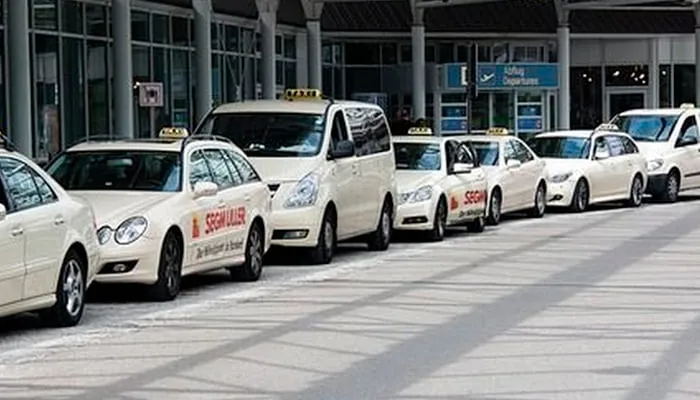
The main difference between a taxi and a VTC lies in how you hire them and how the price is set. A taxi is a public service with a municipal licence: you can hail one in the street, take one at a rank or order one by phone or app, and it charges according to fares approved by the authorities. A VTC (a private-hire vehicle with driver, usually booked through an app) is a chauffeur-hire service that must always be booked in advance, normally through an app, at a price set by the company or platform.
For travellers, these differences are not theoretical: they affect what you pay, where you are picked up and what you can complain about if something goes wrong. Below we go through them one by one, without getting into the industry's disputes and with what helps you decide.
Taxi and VTC, side by side
This table sums up the most important differences. Bear in mind that VTC rules have changed several times and that some details depend on each region and each city council.
| Taxi | VTC | |
|---|---|---|
| Operating permit | Municipal taxi licence | Authorisation to hire out a vehicle with driver |
| How you hire it | In the street, at ranks, by phone, WhatsApp, website or app | Only booked in advance, normally by app |
| Price | Official fares approved by the authorities; fixed fare on some journeys | Set by the company or platform and accepted when you book |
| Taximeter | Compulsory | No taximeter |
| Appearance | White with a red stripe, roof light and licence number | Car without taxi livery, with an identification sticker |
| Ranks and airport | Can wait at the taxi ranks at the terminals | Cannot use taxi ranks; picks up at the agreed point |
| Bus lane | Can use many of the city's bus lanes | Uses the general traffic lanes |
Licence and public oversight
A taxi needs a municipal licence tied to a specific vehicle, and whoever drives it must hold the municipal driver's permit, which in Madrid requires passing an exam. The number of licences is capped and the City Council inspects vehicles, taximeters and paperwork. If you want to know how to obtain one, we explain it in how to get a taxi licence.
VTC operate under authorisations to hire out vehicles with a driver, with their own national and regional rules. They are not illegal by definition: what the law requires of them is a different way of working, based on advance booking. That is why they cannot cruise around looking for customers or pick up someone who waves at them in the street.
How the price is set
Taxis: official fares and fixed fares
Taxi fares are approved by the authorities and are public: the initial charge, the price per kilometre or per unit of time, supplements and different fares depending on the day and time. The taximeter applies those rules and anyone can look them up. We explain it step by step in how taxi fares are calculated in Madrid.
In addition, there is a fixed fare between Barajas Airport and the area inside the M-30: €33 from anywhere inside the M-30, regardless of traffic. Our service extends that logic to the whole Madrid region with a fixed price by area that you can check in the fares table.
VTC: the platform's price
With a VTC, the price is calculated by the company or the app, which shows it to you before you confirm. It can vary with demand, the time of day or each platform's conditions, so the same journey can cost different amounts at different times. It is neither better nor worse in itself: it depends on the day, and it is worth comparing.
How to recognise each vehicle
In Madrid, taxis are easy to spot: a white body with a red stripe on the front doors, a light on the roof, a taximeter and the licence number on display. We explain it in detail in the colour of taxis in Madrid. A VTC is a car without that livery, which must carry the sticker required by the regulations and whose details (number plate, driver) the app shows you when you book.
If someone offers you a ride in the arrivals hall without you having booked it, be wary: neither a legal taxi nor a legal VTC looks for customers that way.
Which suits you for getting to the airport?
Both options can work for you. In the taxi's favour are the fixed fare to the area inside the M-30, the ranks at every terminal and the option of booking it at a fixed price. A VTC may suit you if you already use an app and you are happy with the price it shows you at the time. If you want to go deeper into the practical comparison, we have an article on the advantages of taxis over Uber and another on choosing between Cabify and a taxi to Barajas.
With us you can book an official taxi to the airport in three steps, see the price instantly and pay online, or pay the driver by card or in cash.
Official taxi at a fixed price
Taxis licensed by Madrid City Council, a fare by area that does not change with traffic and a 24-hour service to all four terminals.
Fixed fares
Airport taxi from your area
- Interior M-30 €33
- Torrejón de Ardoz €30
- Alcobendas €33
- San Sebastián de los Reyes Pueblo €33
- Alcalá de Henares €53
- Getafe €53
- Leganés €53
- Majadahonda €53
- Las Rozas de Madrid €58
- Móstoles €63
- Alcorcón €63
- Fuenlabrada €63
Need a taxi to the airport?
Instant fixed price. No sign-up.
- Journey
- When
- Your details
We can't find it on the list.
Call or message us and we'll give you a price straight away.
Terminal · Madrid-Barajas
Your fixed price
Passengers
Suitcases
Your fixed price
Booking received!
We'll confirm your booking by phone shortly. If it's for less than 2 hours from now, please call us directly.
Reference
Your fixed price