Why drive on the right? History and curiosities
Swords, carts and Napoleon: the most common explanations for why almost the whole world drives on the right, who still drives on the left and what changes when you take a taxi.
Published on 17 May 2019 Updated on 1 November 2026 6 min read

Why drive on the right? There is no single documented answer, but the most widely accepted explanation is a practical one: with the arrival of large wagons pulled by several horses, the driver usually sat or rode on the left so as to handle the whip with his right hand, and keeping to the right let him see the oncoming wagons better. The custom spread across much of Europe and the Americas, and with the arrival of motor cars it became the rule. Today most countries drive on the right, and a minority, led by the United Kingdom, still drive on the left.
From riders to wagons: the most common theories
The age of knights: on the left
It is often said that in Antiquity and the Middle Ages people travelled on the left. The reason would be that most people are right-handed: keeping to the left, a rider had his right hand, his sword hand, on the side of whoever was passing him. It was also easier to mount a horse from the edge of the road. It is a very widespread explanation, although the historical evidence is scarce.
Large wagons: on the right
With goods being carried in wagons pulled by several horses, the logic changed. The driver did not always sit on a driving seat: he often rode the rear left-hand horse so as to have his right hand free for the whip. From that position, the safest thing was to pass other wagons on the left, in other words to keep to the right, so he could judge the distance between wheels properly.
Napoleon and the spread of the right
Another very popular explanation gives France a key role. After the Revolution, driving on the right supposedly became widespread, and Napoleon's conquests then carried it across much of the continent. The countries that were not under his influence, led by the United Kingdom, kept to the left, and the British Empire exported that custom to its territories. It is an appealing story that explains today's map well, although historians qualify it: in many places the change was gradual and happened for very different reasons.
Who drives on the left today
The countries that drive on the left are a minority, but they are neither few nor small: India alone accounts for hundreds of millions of drivers and passengers. These are the best-known cases:
| Region | Countries |
|---|---|
| Europe | United Kingdom, Ireland, Malta and Cyprus |
| Asia | Japan, India, Thailand, Indonesia, Malaysia and Singapore |
| Oceania | Australia and New Zealand |
| Africa | South Africa, Kenya and other countries in the south and east of the continent |
The case of Japan is curious, because it was never part of the British Empire; various explanations have been given for its choice, from samurai tradition to the influence of British engineers on its first railways.
Sweden, the great switch of 1967
The most famous change of side was made by Sweden in September 1967. The country drove on the left, but its neighbours drove on the right and most of its cars already had left-hand drive. On the day of the switch, known as Dagen H, traffic was stopped for a few hours so that every vehicle could move over to the other side of the road.
And in Spain
At the beginning of the 20th century, Spain had no single rule: the side of the road depended on each city or province, and Madrid was for a time one of the places that drove on the left. National traffic regulations eventually made driving on the right standard across the whole country. For anyone who wants to know more about those early years of the motor car and the taxi, we have some brief historical notes on taxis.
What changes for a taxi passenger
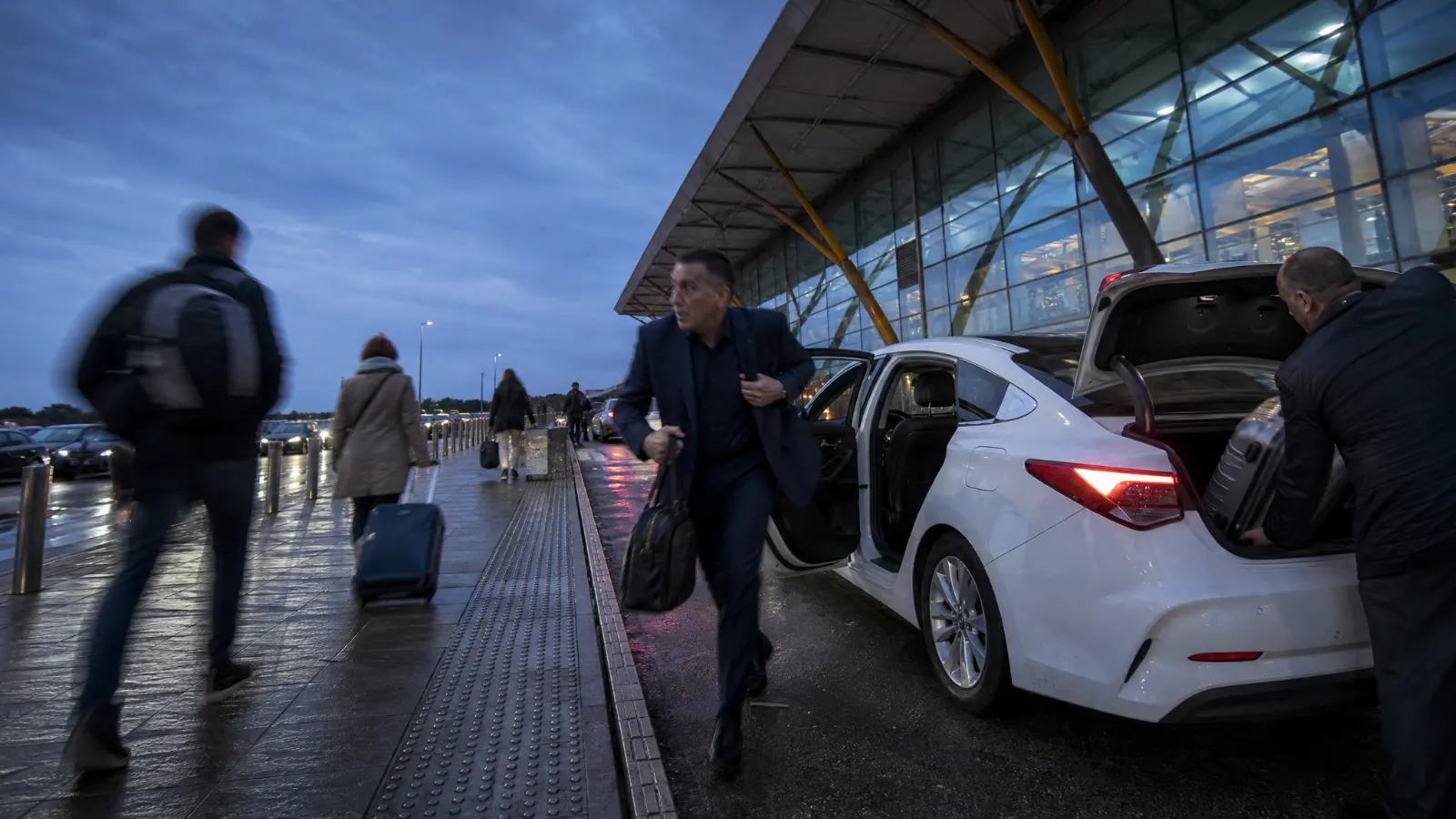
The side of the road you drive on decides something as everyday as the door you use to get in and out of a taxi. In Spain the car pulls up next to the kerb on the right, so the safe thing is to get out through the rear right-hand door, without opening it into the traffic lane. In London or Tokyo it is the other way round: the kerb is on the left, and in Tokyo that door is also opened automatically by the driver. If you are travelling to one of these countries, our special on taking a taxi abroad has more practical advice, and in the most recognisable taxis in the world you will see what the London black cab and the Japanese taxi look like.
Other recommendations for anyone coming from a country that drives on the left (or going to one):
- When crossing the street, look both ways even if you think you know where the cars are coming from. It is the most common tourist mistake.
- If you hire a car, the first few kilometres are hard work: roundabouts, merging and turns are all the other way round. For getting around the city or to and from the airport, a taxi saves you that effort.
- Wear your seat belt in the back seat too; here we explain seat belt use in taxis.
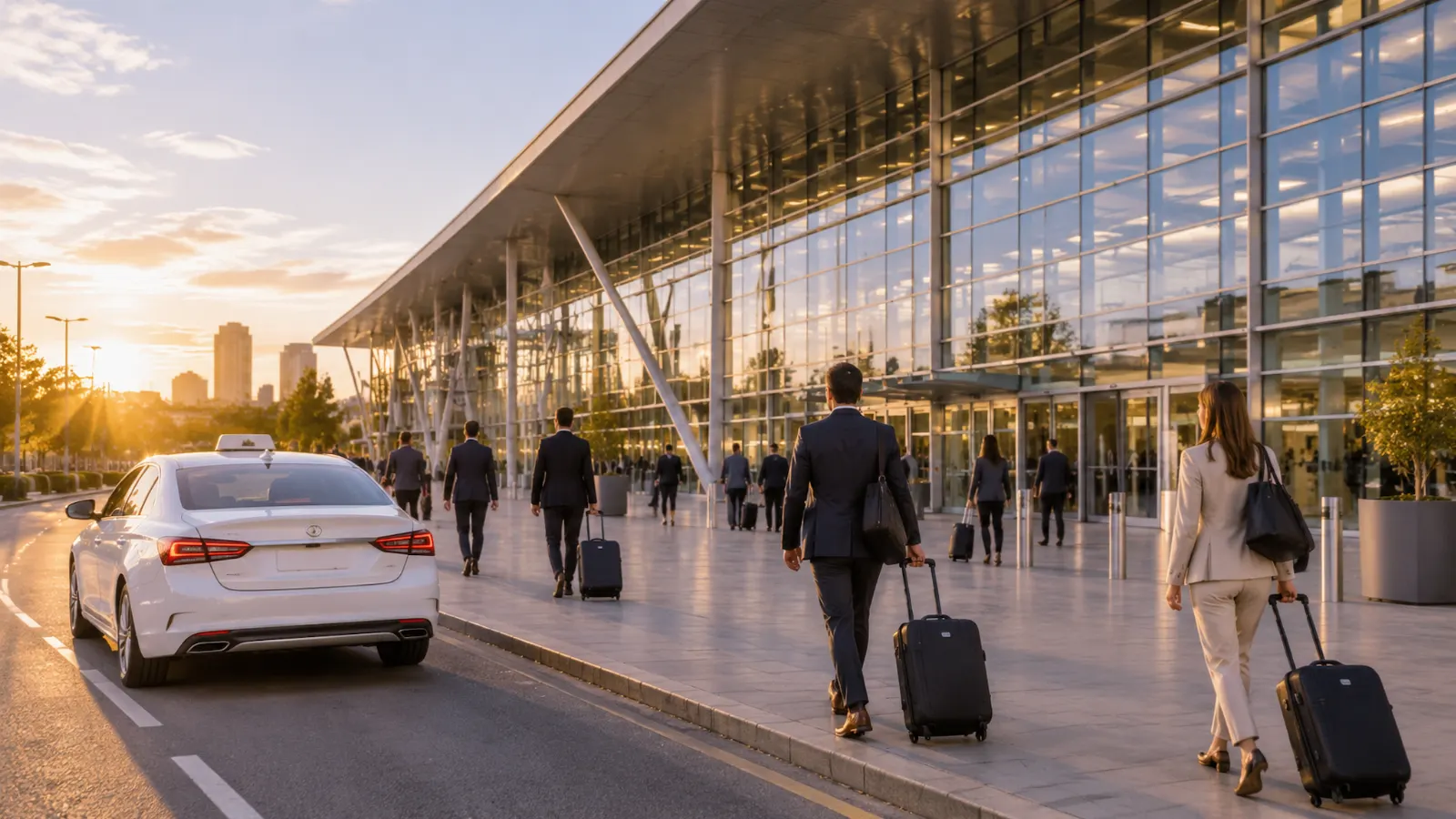
If you are arriving in Madrid from the United Kingdom, Ireland or Japan and do not want any complications on your first day, airport pickup is arranged with your flight number and the price is fixed: from inside the M-30, €33 to any terminal. For the return trip, you can book your airport taxi in advance.
Arriving in Madrid and do not want to drive?
We pick you up at any Barajas terminal in an official taxi with a fixed price, at any time of day.
Fixed fares
Airport taxi from your area
- Interior M-30 €33
- Torrejón de Ardoz €30
- Alcobendas €33
- San Sebastián de los Reyes Pueblo €33
- Alcalá de Henares €53
- Getafe €53
- Leganés €53
- Majadahonda €53
- Las Rozas de Madrid €58
- Móstoles €63
- Alcorcón €63
- Fuenlabrada €63
Need a taxi to the airport?
Instant fixed price. No sign-up.
- Journey
- When
- Your details
We can't find it on the list.
Call or message us and we'll give you a price straight away.
Terminal · Madrid-Barajas
Your fixed price
Passengers
Suitcases
Your fixed price
Booking received!
We'll confirm your booking by phone shortly. If it's for less than 2 hours from now, please call us directly.
Reference
Your fixed price