Driverless cars: what they are, how they work and when they will arrive
Driverless cars already operate as robotaxis in some cities around the world, but in Spain they are still at the testing stage. We explain the levels of autonomy, the technology and the challenges.
Published on 6 September 2016 Updated on 1 November 2026 7 min read
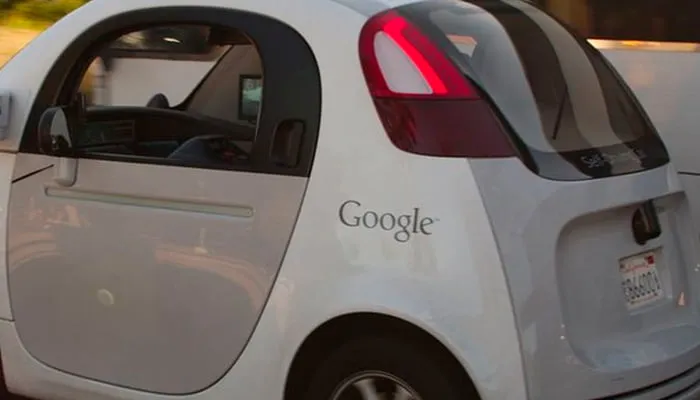
Driverless cars are vehicles that can drive without a person controlling the steering wheel or the pedals, thanks to sensors, maps and artificial intelligence software that interprets the surroundings and makes decisions. Commercial robotaxi services already exist in some cities in the United States and China, but the cars sold in Spain offer at most advanced driver assistance, in which the driver remains responsible at all times. Fully autonomous driving, anywhere and in any situation, is not yet a reality.
Not so long ago it seemed like science fiction, and today it is one of the fields where carmakers and tech companies invest the most. In this guide we explain where things stand, how it works and what could change in passenger transport, including journeys to the airport.
The six levels of autonomous driving
To talk accurately about autonomous cars, people use the classification drawn up by SAE, the international association of automotive engineers, which distinguishes six levels. The key difference lies in who watches the road: up to level 2 it is always the driver; from level 3 onwards, under certain conditions, it is the system.
| Level | Name | What the system does | Role of the person |
|---|---|---|---|
| 0 | No automation | Only gives warnings (for example, of an object in the blind spot) | Drives at all times |
| 1 | Assistance | Helps with speed or with steering, not both at once | Drives and supervises |
| 2 | Partial automation | Controls speed and steering at the same time on certain roads | Always supervises and must step in instantly |
| 3 | Conditional automation | Drives by itself only in specific conditions | Can stop watching the road, but must take back control when asked |
| 4 | High automation | Drives with no person on board within a defined area or situation | Does not need to step in within that area |
| 5 | Full automation | Drives on any road and in any situation | Is just a passenger |
Most new cars with “autopilot” or “assisted driving” stay at level 2: they keep the car in its lane and at a set distance from the vehicle in front, but they require hands on the wheel and constant attention. The robotaxis that run with nobody at the wheel in some cities are level 4: they drive themselves, but only within the areas and conditions they have been prepared for.
How an autonomous car “sees”
A driverless car combines several technologies that complement one another, because none of them works well in every situation:
- Cameras that read signs, traffic lights and road markings and recognise pedestrians or cyclists.
- Radar, which measures distances and speeds even in rain or fog.
- Lidar, a laser sensor that builds a three-dimensional map of everything around the car.
- Ultrasonic sensors for manoeuvres at very close range.
- Satellite positioning and high-definition maps, which locate the vehicle precisely. If you are interested in how this part works, we explain it in the importance of GPS in driving.
All that information is processed by an on-board computer running artificial intelligence software trained on huge amounts of driving data. The system predicts what other road users will do and decides when to brake, turn or give way.
Where are driverless cars already on the road?
The most visible progress is in robotaxis: services where you order a car from an app and it arrives with nobody at the wheel. They operate commercially in some cities in the United States, with Waymo as the best-known example, and in several cities in China. Always within defined areas, mapped in detail and with remote supervision.
In Europe the roll-out is slower. Some carmakers offer level 3 systems on certain models and in very specific conditions, such as motorway traffic jams, and there are pilot projects for autonomous shuttles on sites and short routes.
What the rules say in Spain
In Spain, the DGT (the national traffic authority) has a procedure for authorising tests of automated vehicles on roads open to traffic, with specific safety and insurance requirements. Outside those tests, the systems on sale are driving aids and the driver is answerable for what the car does: they must stay alert, with their hands ready to act, and follow all traffic rules. The rules are evolving, so it is worth keeping an eye on the updates published by the DGT; we review some recent changes in what is new in traffic regulations.
The big challenges still to be solved
Why autonomous cars are not everywhere yet
Unexpected situations
Roadworks, police officers directing traffic, pedestrians crossing where they should not or very narrow streets are still hard for a machine to handle.
Weather
Heavy rain, fog or snow reduce the effectiveness of cameras and sensors.
Legal liability
It has to be decided who is liable in the event of an accident: the manufacturer, the service operator or the owner.
Public trust
Many travellers still prefer to have a person at the wheel, especially on long journeys or with children.
Cost
Sensors, computers and detailed maps make the vehicles and their maintenance more expensive.
What would change for taxis and airport journeys?
Driverless cars raise fundamental questions for taxis: who helps with the suitcases, who deals with a last-minute change of terminal or who looks after an elderly person or a family with young children. A good taxi driver's knowledge of the city, which we talk about in the extraordinary brain of taxi drivers, is not easy to replace, and the human side of the service counts for a lot when it comes to making a flight on time.
The most likely scenario is a gradual transition in which driving aids make vehicles safer while the driver stays in charge. We look at how the service could evolve in the future of taxis in Madrid and what the vehicles might look like in the taxi of the future.
In the meantime, to get to Barajas you can count on professional taxi drivers licensed by Madrid City Council, 24 hours a day. From the centre, the fixed fare from inside the M-30 is €33, and from any other area you can book your airport taxi at a fixed price.
Until the robotaxis arrive
A professional taxi driver picks you up at your door, helps you with your luggage and takes you to your terminal at a fixed price, by day or in the early hours.
Fixed fares
Airport taxi from your area
- Interior M-30 €33
- Torrejón de Ardoz €30
- Alcobendas €33
- San Sebastián de los Reyes Pueblo €33
- Alcalá de Henares €53
- Getafe €53
- Leganés €53
- Majadahonda €53
- Las Rozas de Madrid €58
- Móstoles €63
- Alcorcón €63
- Fuenlabrada €63
Need a taxi to the airport?
Instant fixed price. No sign-up.
- Journey
- When
- Your details
We can't find it on the list.
Call or message us and we'll give you a price straight away.
Terminal · Madrid-Barajas
Your fixed price
Passengers
Suitcases
Your fixed price
Booking received!
We'll confirm your booking by phone shortly. If it's for less than 2 hours from now, please call us directly.
Reference
Your fixed price