What is new in traffic rules: what affects taxis in Madrid
Reserved lanes, urban speed limits, low-emission zones and seat belts: the traffic rules that shape a taxi journey in Madrid.
Published on 25 January 2017 Updated on 1 November 2026 5 min read
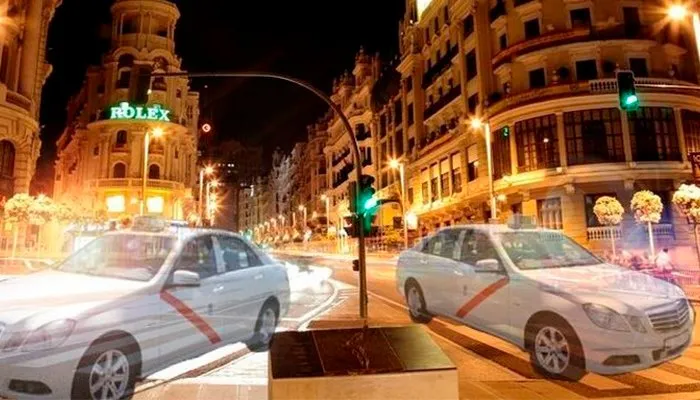
The traffic rules for taxis in Madrid combine the general rules of the DGT (Spain's traffic authority), which apply to every driver, with some specific features of the public service: taxis can use the city's bus lanes and, under certain conditions, high-occupancy lanes such as the BUS-VAO lane on the A-6; they must respect urban speed limits and the environmental requirements set by the City Council, and their passengers are required to wear a seat belt. The rules change frequently, so here we go through the ones that most affect your journey and where to check their current version.
The original version of this article covered the changes of a particular year. Many of those measures are now part of everyday life, and others have been extended, so we have turned it into a practical guide.
Reserved lanes: where taxis can drive
One of the advantages of a taxi over a private car is access to lanes that other vehicles cannot use:
- Urban bus lanes. In Madrid, taxis can drive in most of the lanes reserved for buses, which lets them avoid some of the queues on the main avenues. The exceptions are signposted.
- The BUS-VAO lane on the A-6. The reserved central lane of the north-west motorway admits taxis under the conditions set by the DGT. We explain how it works in get there sooner in the VAO lane.
- Airport access roads. At Barajas, the drop-off and pickup areas at each terminal are organised separately for taxis, buses and private vehicles.
Speed in the city: limits that are no longer new
The reform of the general speed limits on urban roads changed the way people drive in Madrid: on streets with a single lane in each direction the general limit became 30, on streets where the road and pavement share a single level it is lower still, and the limit of 50 remains on roads with two or more lanes in each direction, unless the signs say otherwise.
For taxis this has a direct consequence: on journeys through the narrow streets of the centre, the trip is made at a lower speed, and in a metered taxi that may show in the amount, because below a certain speed the meter charges by time. On airport transfers with a fixed price, on the other hand, the average speed of the journey does not change what you pay.
Low-emission zones and cleaner taxis
Madrid applies access and traffic restrictions according to each vehicle's DGT environmental label. Taxis also have their own requirements under municipal regulations, which have been gradually tightened to renew the fleet with low-emission vehicles. That is why hybrid taxis are very common today, and there are more and more electric ones; we go through them in electric taxis.
For passengers, these restrictions involve no paperwork: a taxi with a valid licence can take you to your destination inside the restricted zones, including the centre.
Passenger safety: seat belts and children
Passive safety rules also affect taxis, and they are the ones that raise the most questions among travellers:
Seat belts
Passengers must wear their seat belt, both in the front and in the back. For taxi drivers there are specific exceptions in certain urban circumstances. We explain it in detail in is it compulsory to wear a seat belt in a taxi.
Travelling with children
Child restraint systems have their own rules in taxis, which depend on the child's height and the type of journey. We go through them in travelling with children in a taxi: the rules. If you book an airport transfer with us, you can request a child seat by giving the child's age, and we will confirm availability.
What changes for you as a passenger
In short, traffic rules translate into some advantages and some precautions:
- A taxi usually gets around better than your own car thanks to the reserved lanes.
- In the city, journeys are slower than a few years ago, so it is best to leave for the airport with a margin: 2 hours before the flight for European ones and 3 hours for international ones.
- Always fasten your seat belt, in the back seat too.
- If you are travelling as a family or a group, ask for the right vehicle: a taxi with up to 7 seats lets you all travel together with your luggage.
And if you would rather not depend on traffic to know how much you will pay, our fixed airport fares set the price by area: from Inside the M-30, 33 euros.
To the airport with time to spare and no surprises
Book your taxi to Barajas for whatever time you need: a fixed price by area, the same with or without traffic.
Fixed fares
Airport taxi from your area
- Interior M-30 €33
- Torrejón de Ardoz €30
- Alcobendas €33
- San Sebastián de los Reyes Pueblo €33
- Alcalá de Henares €53
- Getafe €53
- Leganés €53
- Majadahonda €53
- Las Rozas de Madrid €58
- Móstoles €63
- Alcorcón €63
- Fuenlabrada €63
Need a taxi to the airport?
Instant fixed price. No sign-up.
- Journey
- When
- Your details
We can't find it on the list.
Call or message us and we'll give you a price straight away.
Terminal · Madrid-Barajas
Your fixed price
Passengers
Suitcases
Your fixed price
Booking received!
We'll confirm your booking by phone shortly. If it's for less than 2 hours from now, please call us directly.
Reference
Your fixed price