
The rise of hybrid cars: types, advantages and why they are a hit with taxis
A hybrid car combines a combustion engine and an electric motor. We explain the types available, their pros and cons and why so many Madrid taxis are hybrids.
Published on 20 April 2017 Updated on 1 November 2026 4 min read
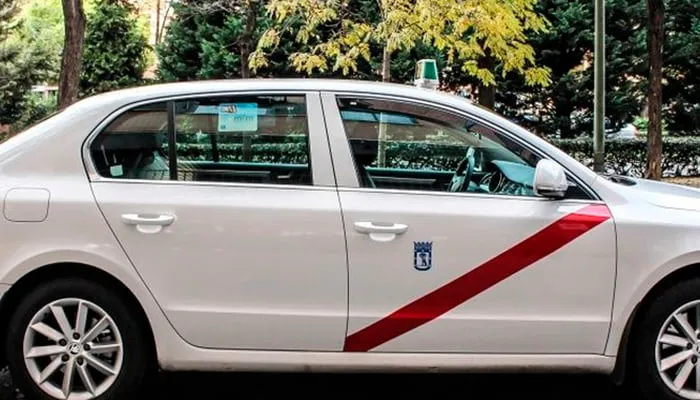
A hybrid car is a vehicle that combines a combustion engine, usually petrol, with one or more electric motors and a battery. The system decides at every moment which to use, or both at once, to burn less fuel. In the city, where you are constantly braking and pulling away, the savings are greater because the car recovers energy when braking and can run in electric mode at low speeds. That is why hybrids have become one of the most common vehicles in Madrid's taxi fleet.
How a hybrid car works
The key lies in three elements that work together:
- Combustion engine: provides the power on the open road and at higher speeds.
- Electric motor: helps when pulling away and accelerating, which is when a combustion engine uses most fuel, and drives the car on its own on some stretches.
- Regenerative braking: when you lift off or brake, the electric motor acts as a generator and recharges the battery with energy that a conventional car would lose as heat.
The driver does not have to do anything special: the car manages the split between the two on its own. And because the combustion engine is still there, the range does not depend on the battery.
Types of hybrid car
Not all hybrids are the same. The difference lies in the size of the battery, whether it can be plugged in and how far it can travel in electric mode.
| Type | How it recharges | Electric mode | Usual DGT (Spanish traffic authority) label |
|---|---|---|---|
| Mild hybrid (MHEV) | Only through braking | Cannot run on electric power alone; assists the combustion engine | ECO in many cases |
| Full or self-charging hybrid (HEV) | Through braking and the engine | Short stretches at low speed | ECO |
| Plug-in hybrid (PHEV) | Plug, braking and engine | Longer distances on electric power alone | Zero or ECO, depending on its electric range |
| Extended-range electric vehicle (EREV) | Plug; a combustion engine generates electricity | Always driven by the electric motor | Zero |
We explain the environmental labels and what they mean for driving in Madrid in Madrid's eco-taxis.
Advantages and drawbacks
Advantages
- Lower fuel consumption in the city than an equivalent combustion car.
- Lower emissions on urban journeys, with an ECO or Zero label.
- No range anxiety: you can refuel at any petrol station.
- Smooth driving, usually with an automatic gearbox.
- Less brake wear, thanks to regenerative braking.
Drawbacks
- A purchase price slightly higher than a similar combustion car.
- On the motorway the savings are smaller, because the combustion engine does most of the work.
- Plug-in hybrids only perform well if they are charged often; otherwise the weight of the battery takes its toll.
Why so many Madrid taxis are hybrids
A taxi is almost the ideal setting for a full hybrid: long hours in the city, constant stopping and starting, and unpredictable journeys where there is not always time to recharge. Add to that the municipal regulations, which have pushed the fleet towards ECO or Zero vehicles, and the reliability many of these models have shown under intensive use.
The next step, fully electric, is growing as the charging network improves; we cover it in electric taxis. And why diesel, once king of the taxi world, has lost ground is explained in diesel, chronicle of a death foretold.
What if you do not need a car of your own?
Before changing your car, it is worth doing the sums. If you use it little and mostly to go into the centre or to the airport, you might be better off without it; we analyse this in own car versus taxi. For your trips to Barajas, check the fixed price for your area in the fares table and book your airport taxi without worrying about parking or labels.
To the airport without a car of your own
We pick you up at your door and take you to any Barajas terminal at a fixed price, at any time of day.
Fixed fares
Airport taxi from your area
- Interior M-30 €33
- Torrejón de Ardoz €30
- Alcobendas €33
- San Sebastián de los Reyes Pueblo €33
- Alcalá de Henares €53
- Getafe €53
- Leganés €53
- Majadahonda €53
- Las Rozas de Madrid €58
- Móstoles €63
- Alcorcón €63
- Fuenlabrada €63
Need a taxi to the airport?
Instant fixed price. No sign-up.
- Journey
- When
- Your details
We can't find it on the list.
Call or message us and we'll give you a price straight away.
Terminal · Madrid-Barajas
Your fixed price
Passengers
Suitcases
Your fixed price
Booking received!
We'll confirm your booking by phone shortly. If it's for less than 2 hours from now, please call us directly.
Reference
Your fixed price